

We call a computer dead when a replaceable part fails. With a decent backup, this is usually just an inconvenience. Replace the part, restore the data and get back to work.
If living tissue is involved, the metaphor is a little more complicated.
I like exploring corner cases, and “organoids” are an interesting one. They sit where silicon AI meets the living tissue behind natural intelligence. An organoid is a small, three-dimensional model of an organ grown from stem cells. A brain organoid develops some brain cell types and network activity, but is not a miniature brain.
A study using brain organoids to classify Braille signals left me with another question: when the organoid has to be replaced, what exactly have we backed up?
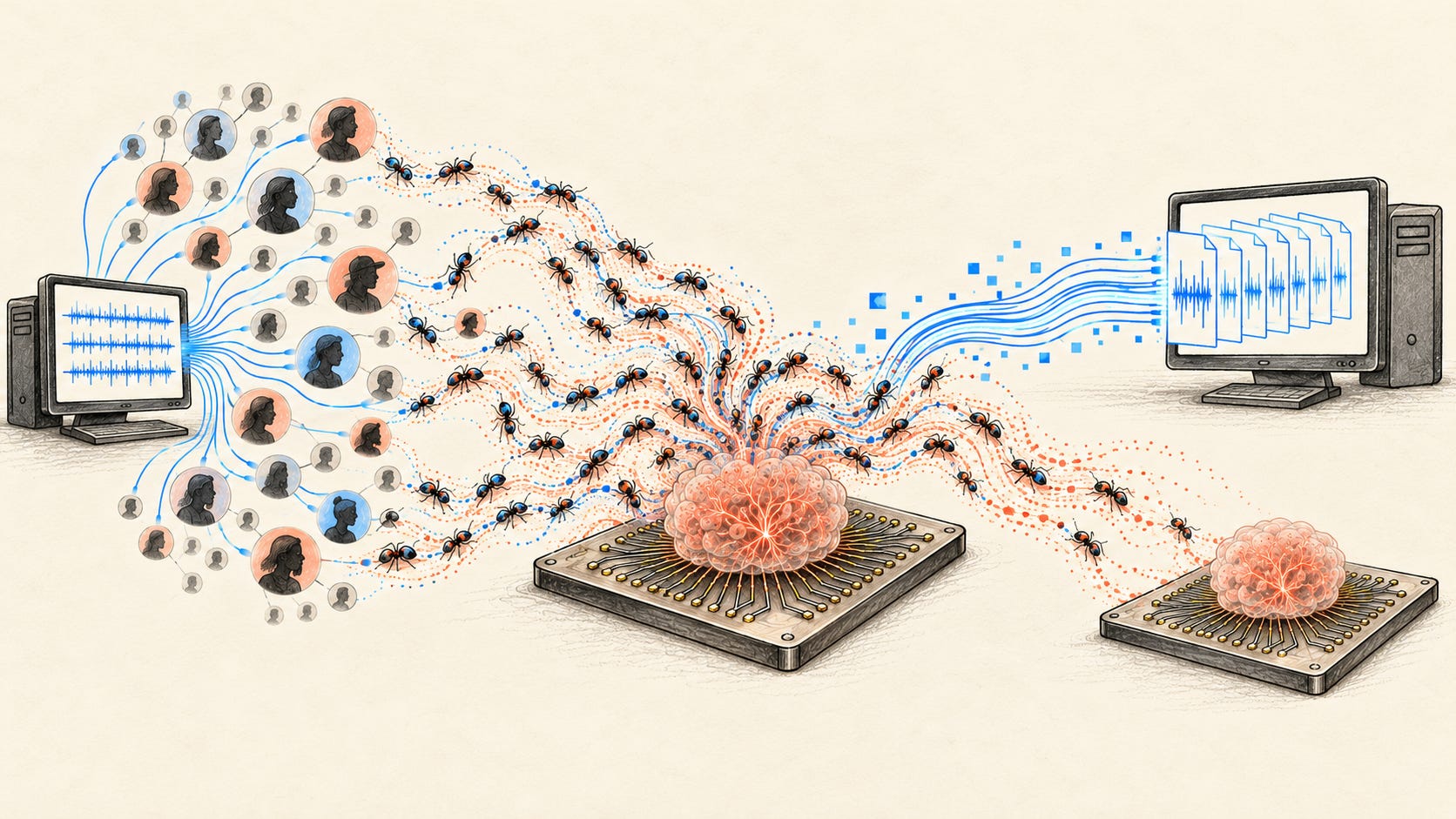
Humans are expensive identities
Years of feeding, teaching and cleaning up pass before we trust a human with heavy machinery or a vote. People are slow to create, impossible to copy and expensive to replace.
Software is not bound by that scarcity.
In a Sybil attack, one actor creates many identities that the system counts separately. They can outvote honest users or defeat systems that mistake accounts for independent judgement. John Douceur showed that, except under extreme assumptions, a distributed system cannot reliably distinguish identities without a trusted authority.
Before AI became commonplace, many of my friends in security tried to put the scarcity of human identity back into software. You see this in reputation and trust systems. Their premise is: Humans have spent millennia developing intuitions about whom to trust; perhaps software could import the characteristics behind those judgements.
A program’s ability to be cloned instantly, and therefore to have no necessarily stable identity, breaks that analogy. It is qualitatively different from merely human identity sped up.
SybilGuard treated social links as evidence of human-established trust. Later analysis found limits: community structure created vulnerabilities, and attackers could target the links. Bruce Schneier distinguishes security from the feeling of security. A web of friends can create that feeling. Software can manufacture that web and as a result that feeling, without being any more secure.
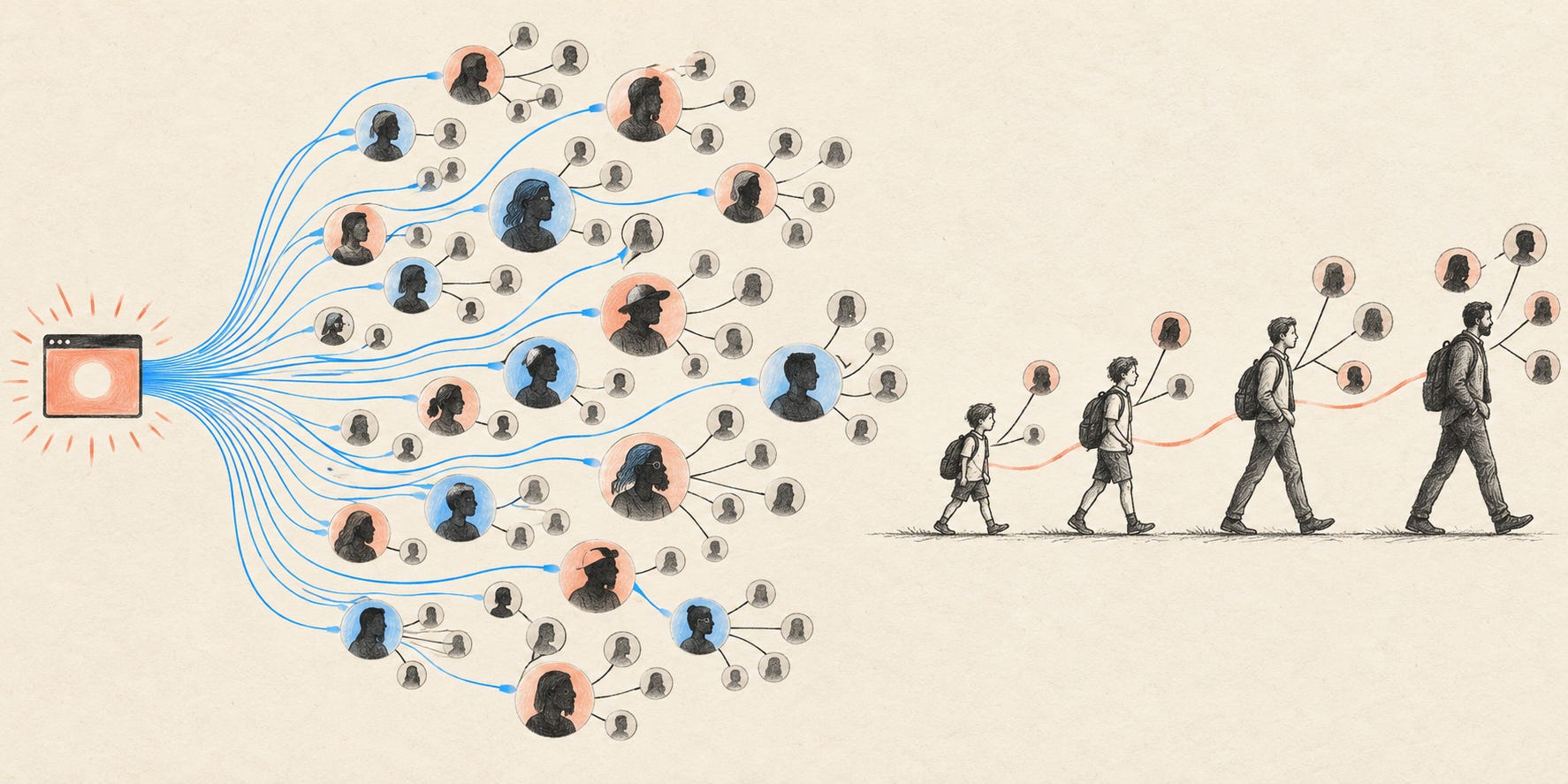
Backups change the moral arithmetic
Analogies are great at helping us reason but when something fundamental to the analogy breaks, we have to reconsider the intuition that analogy is guiding us towards.
For example, the ability to back up and restore a system changes the ethics of that system. Deleting the only copy is different from stopping one instance when an identical one can be restarted.
Death is no longer death if we can seamlessly restore yesterday’s version tomorrow.
Kenton Varda applies this argument to AI ethics. Our ideas about rights, he argues, come from fragility and self-preservation as well as intelligence. If people could be restored after death or copied whenever they were busy, much of our existing moral system would make less sense.
Richard K. Morgan’s Altered Carbon turns that premise into a murder mystery: a restored victim hires a detective because his backup cannot remember his murder.
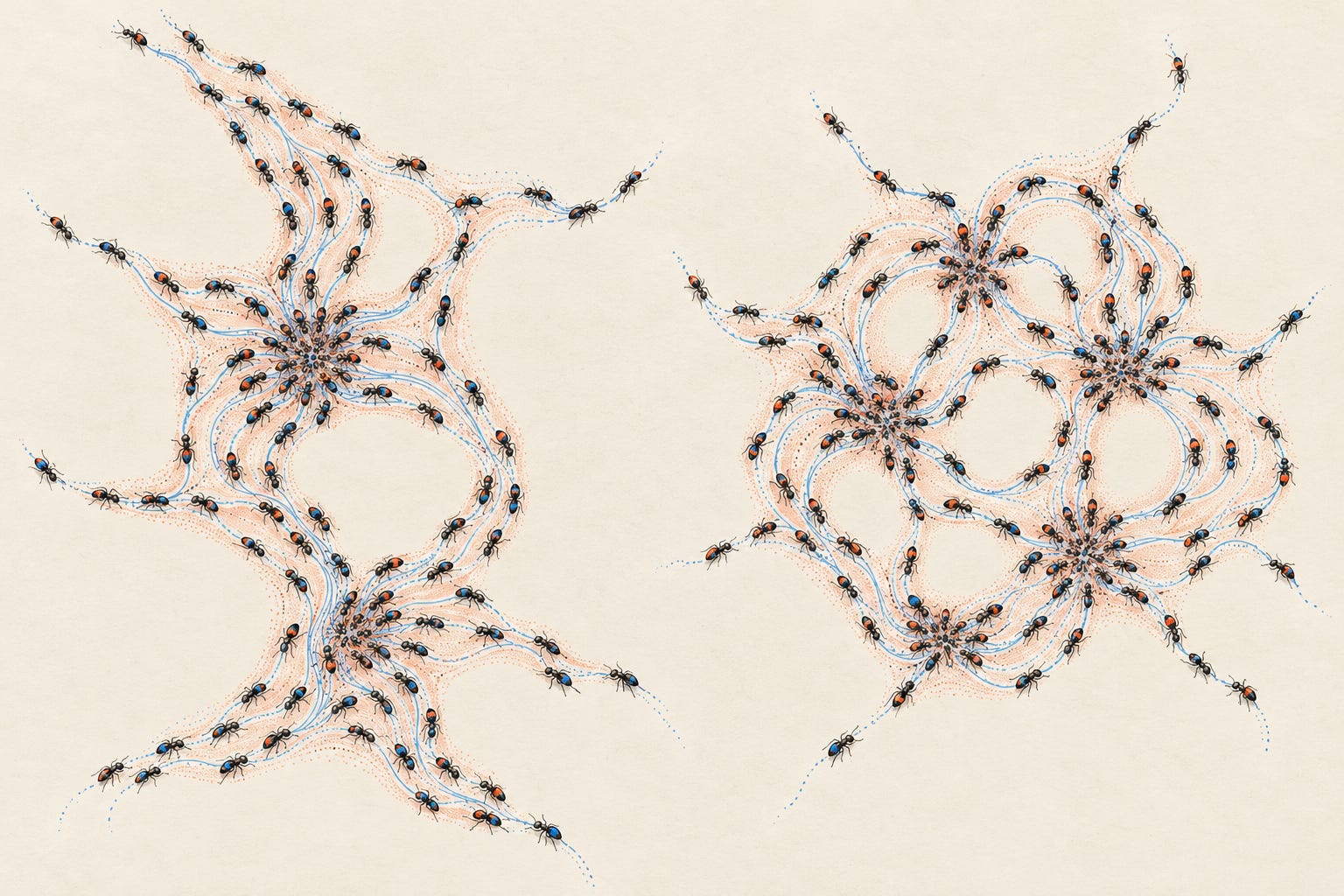
Douglas Hofstadter’s “Ant Fugue” offers a stranger (heh!) test. Aunt Hillary is an ant colony that thinks even though none of her ants can. Her ants die and are replaced; the same ants had previously formed another colony with another personality. Copying every ant would not back her up. You would have to preserve the roles, routes, signals and relationships that make the colony her.
This does not settle AI’s moral status. In this essay, I am less interested in whether a system “understands” than in what persists when its parts are replaced. Humans cannot be copied. Programs can return from backup. Aunt Hillary can survive new ants, but perhaps not a new organisation.
An organoid computer is a hybrid. Its digital parts can be copied and networked, while useful state may reside in mortal tissue. Is its identity in the cells, their organisation or the machinery around them?
What the organoids did
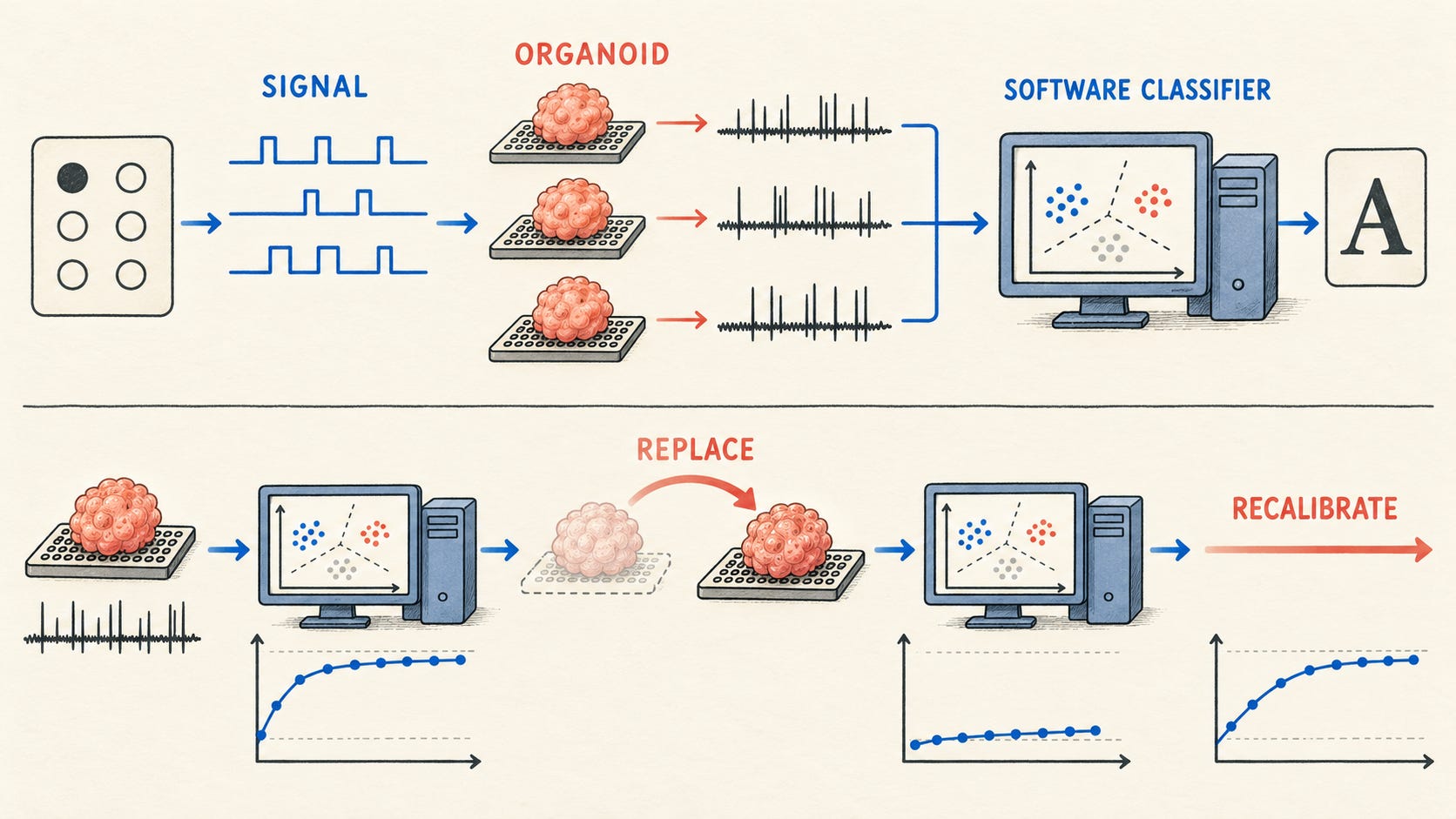
The researchers encoded tactile data as electrical pulses sent to human forebrain organoids on eight-electrode arrays. The tissue produced patterns of neural spikes. A conventional support-vector machine then classified those responses as one of 26 letters. One organoid averaged 61% accuracy; combining three reached 83%.
The organoids did not learn Braille. This was an open-loop experiment: the conventional classifier learned the labels and no feedback trained the tissue. Classification is not biological learning, and neither amounts to reading or understanding Braille. (Though, I admit as I write that sentence - a part of me wonders, “what then is?”).
In clean conditions, classifying the encoded stimulation without the organoids reached 82%. What I found more interesting happened when the researchers corrupted the signals: the three-organoid system was more robust.
The Neuroplatform reports organoid lifetimes exceeding 100 days in its best cases. That may be impressive for tissue culture but is rather an awkwardly short time for a computer.
What survives replacement?
Here is the experiment I would like somebody to run. Measure performance on unseen examples. Leave the digital encoder and classifier alone, replace one organoid and try again. The drop tells us how much useful computation survived the swap.
Next, allow recalibration: recompute firing baselines, remap electrodes, tune the encoder and retrain the classifier. Record the recovery time, labelled examples and human fiddling involved. Then repeat with organoids from different batches. The variation may be as interesting as the average.
The harder version comes when the tissue has genuinely learned something. Can saved digital information bring fresh tissue close to the old behaviour, or must it repeat the training? Stimulus histories and spike recordings observe biological state; they do not necessarily preserve the connections and synaptic changes behind it. “We kept the data” is meaningful only if that data can restore the function.
Computers fail. That is the point
There is an obvious objection: ordinary computers fail too. Quite right. We trust them because a lot of engineering has gone into replication, checkpoints and replaceable machines.
Biological computing may develop its own equivalents: redundant organoids, adaptive decoders, hot spares or gradual turnover. The Braille study’s three-organoid ensemble already hints that biological variation can help rather than merely inconvenience us.
This is not a gotcha for biological computing. If new tissue slots in after a little calibration, excellent. The important state lives elsewhere, or can be reconstructed. If learned function lives in the tissue, recovery may look more like rehabilitation than restoring a file.
I would like to know which sort of machine it is. If an organoid is a computer, I want to know what survives when its living part “dies”.